Posts

10 Questions to Ask Your Community Partners

Image
by Ann Abbott "How are things going?" Is that as deep as you probe when talking to your community partner? Maybe you're afraid they will tell you something bad, and you'll have to drop everything and address the problem. Well, you do need to ask more questions than that. First of all, you need to fix any problems that exist. Secondly, the more you know about your community partner, the more you can help your students extract meaning from their experiences in the community. So, here are ten questions to ask. I'm sure you can think of more! Leave a comment to add yours. One-to-One Questions. What's the best thing a student has done? You want to encourage your students to do more of this behavior. What's the worst thing a student has done? This can be painful to hear. Believe me. Sometimes it's really egregious ("Can you please tell your students not to teach the children here how to swear in English?"). Sometimes they are little th...


Authentic Oral Input for Spanish Community Service Learning Students

Image
by Ann Abbott As I mentioned in a previous post , I was inspired by the workshop that Michael Leeser and Gregory Keating gave at ACTFL about how to use authentic oral input in a Spanish class. Also in a previous post I provided a lesson plan to go along with the first video interview included in the Comunidades website, in which Yoloplatti Hernández talks about the community service requirement for all Mexican university students . So, have your students watch the first video interview (in Unit 1 and presented as a series of short clips), then have them do these additional activities. Vocabulary Activity Asocia la actividad con el problema. 1. ___ tejer 2. ___ vacunar 3. ___ dar clases 4. ___ limpiar un parque a. enfermarse b. enfriarse c. verse feo d. no tener acceso a información Grammar Activities 1. Indica si la frase se refiere a los estudiantes universitarios de Mexico, de EE.UU. o los dos. México / EE.UU. 1. Es preciso que presten servicio en la comunidad. México / EE.UU. 2...

Leave Students Alone on Facebook

Image
by Ann Abbott Language instructors are curious about how to use social networking sites in their teaching, and there were many ACTFL sessions about Facebook and other technologies. Everyone wants to know what the possibilities are. Maybe we should just let our students do what they are already doing. Something I read recently in a parenting magazine caught my attention: "Dr. [Christine] Greenhow [University of Minnesota in Minneapolis] recently studied how students use social networking sites (SNSs) as learning tools and found that students are developing 'twenty-first-century skills'--like competency in technology, creativity, communication and collaboration. Many use SNSs to discuss homework and school-related anxieties as well as to post their creative ventures like pieces of fiction writing, photographs and videos. In short, the sites are now part teen hangout, part study hall." (Judith Aquino, Working Mother August/September 2009) That reminds me a lot of how I ...

"Un Momento. Is That Written with a "C," a "Z" or an "S?"

Image
by Ann Abbott Recent conversations with some of my community partners have convinced me even more that our students need as much practice as possible with Hispanic names. When they are doing their community service learning (CSL) work, they simply make too many mistakes. That can create all sorts of problems, especially when filing names. And while students may not think that filing is a valuable use of their time, it is in fact invaluable to the people who need to access those files at a moment's notice, for vital tasks. Although there are many reasons that students might make mistakes with Hispanic names, right now I'd like to focus on possible confusions between the similar sounds of "s," "z" and "c" in Spanish. On the telephone, or even in person, how would you know if a person's name was Velázquez , Velásquez or Velásques ? All three are possible. What about Macías or Masías ? I have seen both. There's only one way to know: Ask! Even...

Using Authentic Input: Tips from Michael Leeser and Greg Keating

Image
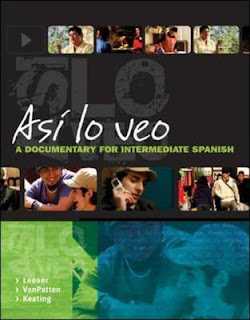
by Ann Abbott While at the ACTFL conference last week, I went to a workshop that Michael Leeser and Greg Keating gave about using authentic input in intermediate Spanish. Michael, Greg and Bill VanPatten are the authors of Así lo veo (McGraw-Hill), an intermediate textbook using unscripted documentary-style interviews with native speakers of Spanish. The book will be available in January 2010. As Michael explained, some Spanish instructors claim that it is impossible to use authentic oral input with intermediate students because it is too hard for them to understand. Thus, the workshop centered on strategies for making authentic input accessible to students. As I listened, my mind was also on the authentic, unscripted interviews with native speakers that are included with my own textbook , Comunidades: Más allá del aula . I'll post more about them in the future, with activities inspired by the information from Michael and Greg in their workshop. I took lots of notes, and here I...

Champaign-Urbana: Donate a Toy

Image
by Ann Abbott Want to help all children in the local community to have a holiday present, but you don't have time to volunteer? Next time you're out shopping, pick up a toy that you can donate to the University of Illinois' Office of Volunteer Program's (OVP's) Holiday Toy Drive. With my broken foot, I won't be able to do much shopping. I'm going to contact Debbie Sim, the organizer, to see if I can send some money. If you can give in any way, contact Debbie or go to their Facebook event for more information . Here is more information from Debbie: "This year OVP is hosting the annual Holiday Toy Drive from November 11 to December 9. All the toys will be given to underprivileged children in the local community. "Last year there was an extreme shortage in toy donations, and there were a lot of children we were unable to give gifts to. Working at OVP and working directly with community agencies I have really come to understand the impact the Universit...

Student Spotlight: Dave Mackinson

Image
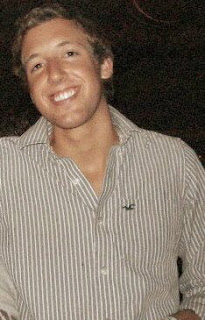
by Ann Abbott Dave Mackinson was a student in my "Spanish & Entrepreneurship" course several years ago. I remember that he was fun, easy-going, well-liked by all his classmates and that I sincerely enjoyed reading his work and listening to what he had to say. This semester, I just happened to run into Dave on campus as he was attending a recruiting event in the College of Agricultural, Consumer and Environmental Sciences. But I knew that our Spanish students could greatly benefit from his insights and experiences as well. So Dave has very generously taken the time to write up some of the touchstone experiences in his path from University of Illinois student to international, agri-business professional. Students, consider this a roadmap! I know that a lot of you are doing many of the same activities that David did as a student, yet you don't know precisely where they can lead. They can lead in many different directions, obviously, but I think you can learn a lot from D...

ACTFL 2009: Sessions of Interest

by Ann Abbott I had a great time in San Diego last week at the American Council on the Teaching of Foreign Languages (ACTFL) Annual Convention and Expo. Even with a broken foot! That kept me from attending all the sessions I would have liked, but I still got to see a lot of friends--from the University of Illinois, Urbana-Champaign, from Prentice Hall, and from Facebook and Twitter--and catch up on their work. Here's a list of friends who presented, in no particular order. They didn't all present on community service learning (CSL), but you might find a topic that intersects with your own interests. Ann Abbott (University of Illinois, Urbana-Champaign) & Darcy Lear (University of North Carolina-Chapel Hill). Assessing Community Service-Learning: A Practical Approach Darcy Lear & Elizabeth Bruno (both from UNC-Chapel Hill). Service-Learning in the Spanish Minor for the Professions Gillian Lord (University of Florida). Attitudes and allophones: Using technology to impro...

Student Reflection: Organizational Challenges and Triumphs for Setting up ESL Classes

Image
by Andy Kraus Picture: Some of the Coordinators hard at work. My first meeting with the ESL group was a couple weeks ago! The tutors sat down and learned about what the program would be like, what the responsibilities are, and we planned dates for the tutoring sessions. After the meeting of tutors (we have a lot this year!), I met with the coordinators. I helped out a lot last year and am going to be one of the main planners this year because of my experience. We have a syllabus lined up and each day of the week one of the coordinators will be planning what we do that day. The students are loving it! Finding and printing materials is a challenge, as it was last year. There are a number of free sites on the internet where we have found good information to use, and we have a number of textbooks as well for the more advanced students. We also have a good number of students this year, around 15. This works perfectly because we have around the same number of teachers, and this helps us give...

Student Reflection: Anthony Solis Introduces Himself and His Work in the Community

Image
Anthony Solis is currently a student in "Oral Spanish." For his honors project, he is working in the community and blogging about his experiences, thoughts and learning. (My apologies to Anthony and the readers--he sent me his post with all the correct diacritical marks, and for some reason I couldn't get them on here. Sorry!) by Anthony Solis Me llamo Anthony Solis y esto es mi primer anyo en la universidad. He tomado clases de espanyol por cuatro anyos en la escuela secundaria. Mi concentracion es estadisticas y mis amigos me preguntan por que tomo mas clases de espanyol si no me ayudan a recibir el titulo. Primero, siempre es bueno "expandir la mente" y comunicarse con personas distintas de uno mismo. Pero, por que me sumerjo en el espanyol? Todo empezo cuando era muy joven. Mi papa puede hablar bien el espanyol para la educacion que recibio cuando el fue estudiante en la escuela secundaria y yo siempre queria conversar con el en una "lengua secreta...

Strike!

Image
by Ann Abbott The TAs at the University of Illinois are on strike. In my Business Spanish class, we talked about strikes during the chapter on Human Resources, and we specifically discussed the possibility of this strike. Now that it's happening, I'd like my students to return to those concepts and work with them in the context of what is going on in university right now and is affecting them. Please click here to see the lesson plan . Feel free to circulate widely! I know that many TAs and profs want to still teach their students yet not cross the picket line and having an on-line lesson is one possible solution.

Student Reflection: Andrew Kraus Introduces Himself and His Work in the Community

Image
Andrew is a student in my "Business Spanish" class, and for his honors project this semester he is using his Spanish in the community and blogging about it here. by Andrew Kraus I'm a senior studying economics and communication, and I am also pursuing a Spanish minor. This will be my second year working with the Newman Hall ESL group, and I'm very excited to start teaching English to native Spanish-speakers of the community again. Last year it was very rewarding to see the students growing in their English ability every week. Besides tutoring last year, I have been fortunate enough to use Spanish outside the classroom frequently in other places. I have travelled to Barcelona, Spain and the Dominican Republic, and both of those experiences greatly honed my ability to "speak on my feet" with native speakers. I also try to read Spanish papers and watch "The Simpsons" in Spanish as much as I can. It is still a unique challenge to transfer that language...

UIUC: Use Knowledge Gained in Class and Community to Innovate!

Image
by Ann Abbott Students, hurry to register for this great opportunity ! “Dear Colleagues: "As many of you know, this is the time of year when the Technology Entrepreneur Center launches the annual V. Dale Cozad New Venture Competition. TEC and the Academy have collaborated on the event for a number of years now, and for the past three years, we have kicked off the Competition with a great event called “speed teaming.” Modeled after “speed dating,” the Cozad speed teaming event allows students with ideas for a venture to meet and talk to students who may not have an idea, but who would nevertheless like to be a part of a team and compete. Many, many students have valuable skills that they could bring to a team: great writing, a capacity for finance, marketing, excellent oral presentation skills, research abilities, etc. Students from many disciplines have participated in Cozad in the past, and the experience is transformative! "All students across campus (and at Parkland) a...

How "Comunidades" Addresses Gender, Immigration, Language and Culture

Image
by Ann Abbott I wrote the piece below for the upcoming newsletter for Women and Gender in Global Perspectives (WGGP) , and I thought I would share it here. I am a Faculty Affiliate of WGGP, and Gale Summerfield, the Director, and I are friends and Faculty Fellows together at the Academy for Entrepreneurial Leadership . Although my work does not focus specifically on gender issues, they permeate all discussions of migration, immigration policies, education and social services--basically, everything we talk about in Spanish community service learning! “'I want to speak Spanish with native speakers!' students say when I ask them what interests them the most about doing Spanish community service learning (CSL)—a teaching methodology in which students do meaningful service learning work within a Spanish-speaking community to enhance their learning of the academic content of the course. Then when I ask what concerns them the most, they often reply, 'I’m nervous about speaking Spa...

How Students Gain Transcultural Literacy through Spanish Community Service Learning

Image
by Ann Abbott Do Spanish departments provide transcultural education? I asked myself that question after reading this article about Prof. Mark Dressman in the most recent edition of Inside Illinois. I'll quote liberally: "According to Mark Dressman, a professor in the department of curriculum and instruction in the College of Education at Illinois, the current group of college students will inherit a workplace where they will need to be prepared for 'significant contact with the rest of the world.' "To adequately prepare today’s students for tomorrow’s global economy, Dressman favors 'transcultural education,' which he defines as an experience that goes beyond the traditional rite-of-passage trip to western Europe. “'In addition to developing an identity as someone from a particular city, state or country, transcultural education focuses on getting students to start thinking of themselves as citizens of the world,' he said. 'It’s a relativel...