Posts

Showing posts with the label community partners

Student Reflection: Why Take SPAN 332 "Spanish & Social Entrepreneurship"?

Image
Wole en frente del Centro para Refugiados by  Olawole Daramola  Hola! El curso  SPAN 332 explora el concepto de emprendimiento social en un contexto latinoamericano. Se aprenden las injusticias en el sistema polĂ­tico contra inmigrantes sin documentos. AdemĂ¡s, este curso revela oportunidades para transformar estructuras injustas de la sociedad y es un espacio para pensar sobre innovaciones de valor. AdemĂ¡s, cada estudiante tiene un sitio donde ellos ayudan la comunidad latina en muchas formas diferentes. La clase proveerĂ¡ conocimiento suficiente para navegar y entender las dinĂ¡micas de cada organizacion en comunidad donde se trabaja. Por ejemplo, si trabajas en El Centro para Refugiados sabrĂ¡s tener mĂ¡s paciencia y compasiĂ³n por los clientes porque en la clase escucharĂ¡s sobre las barreras que enfrentan los inmigrantes. Éste es el sitio donde yo trabajĂ©. AprendĂ­ mucho en este curso y estoy muy feliz de haberlo tomado. Primero, mejor Ă©  mi español--m...

Task List for Directors of Spanish Community Service Learning Courses

by Ann Abbott In some ways the Fall 2016 semester was on of my most difficult.  But in one specific way it was the best: I scheduled specific times for taking care of all my weekly teaching tasks and did them. That's right, every week I graded, entered grades in Blackboard, and responded to student problems promptly. Preparing the final grades was no problem whatsoever because everything was ready to go. Hurray! What a relief! In the past, my calendar showed my teaching times (of course) and my office hours. But I used my office hours to address whatever was on my desk, answer emails, decompress, any number of things that push and pull all of us during a normal workday. I would also make my office hours available in Doodle polls for committee meetings. But this semester, I guarded my office hours carefully and used them to catch up on my grading and prep immediately following class. So in that spirit of organization and prioritization, I'd like to share my deta...

Service Learning Workshop for Liberal Arts and Sciences

Service learning in liberal arts and sciences from Annie Abbott by Ann Abbott Next week I´ll give a workshop on Service Learning . My goal will be to help people from many disciplines envision how service learning can work for their courses and within our local community. Workshop Description Research shows that service learning helps students better understand "messy problems"--the kinds of complex, interconnected issues that challenge our communities and that lie at the heart of our disciplines. In this workshop we will start with the basics of service learning to understand what it is, why the AACU lists it as a "high-impact educational practice," and what it looks like in a variety of disciplines. Then we will turn to our local community. As we identify strengths and challenges within our cities and nearby areas, we will sketch out specific ways we can connect our courses and disciplines to community-identified needs. Service learning student...

YouTube Video Edits as Reflection/Assessment for Spanish Community Service Learning

Image
by Ann Abbott I try to make my reflections and tests be learning opportunities. That is, I don't just want to know what students know, I want them to learn something new through the process of taking my test or writing a reflective essay. What's even better than that? When the product of their reflection/exam can actually be used for an authentic purpose in the community. To meet an authentic, community-identified need. I was emailing with Ricardo Diaz  this week about the interview that Allison Gattari and I did on public access radio and television. (I was letting Ricardo know how much I enjoyed the conversation and felt that we had just scratched the surface.) When he gave me the link to the CU Immigration TV YouTube channel  and I looked at the page again, it dawned on me: My students could provide editing for the videos that would increase their value for the channel. Ricardo agreed, and so my "Spanish in the Community" and "Spanish & Social E...

Spanish Community Service Learning: First Day of Class

Image
by Ann Abbott I have shared my first-day-of-the-semester lesson plans before. Here's the first day from last semester, focusing on the constant back-and-forth between big-picture learning and up-close-and-personal learning .  Here's the first day from one year ago .  I think the first day is really important. You have a chance to make a big impression. So I always teach. I don't go through the syllabus and tell them I'll seem them next time. So here's what I did on the first day of class of the Spring 2015 semester. It walked them through our never-ending cycle of class, community, class, community... Class I thanked students for signing up for this course. I know that it is an elective and that for many students it doesn't officially "count." It takes a special student to take one the unique work for this class and to show solidarity with a vulnerable community. Then I put them into pairs, told them to talk five minutes (hablar s...

Choice Is Important to Students in Spanish Community Service Learning

Image
by Ann Abbott Last year I gave a talk about Spanish community service learning (CSL) at the University of Illinois, Chicago, invited by my friend and colleague Prof. Kim Potowski. I told my "Spanish in the Community" students that people at UIC were interested in starting a course similar to ours, and I asked them what they thought I should tell my UIC colleagues. By far the most frequent piece of information was that they should offer students many options for community partners.  Second in frequency, they thought the UIC faculty should know about the advantages of a Spanish CSL course. Here are some specific advantages they mentioned: it increases students' confidence; it gives them many opportunities to practice; it helps them understand the real issues confronting local Latinos.  One student gave a piece of advice about the places where students work: they should be organized and well-structured.  One student said that the course should help students with...

Community Colleges in Illinois' New Growth Latino Communities

Image
Infrastructures for Spanish-speakers in new growth communities are a lot like this road. by Ann Abbott During the next few years, I will be working with the University of Illinois' Center for Latin American and Caribbean Studies (CLACS) on a project that they included in their grant renewal proposal and that apparently was well received by the reviewers: helping community colleges to implement Spanish community service learning. This semester, Dara Goldman, the Director of CLACS, and I began talking and brainstorming.  This could be, I told her, an opportunity to build a model of capacity-building, linguistic understanding and transcultural competence in new growth Latino communities. But it's not going to be easy... What is a new growth community?  The executive summary of a report by the Kaiser Family Foundation explains it in this way: This report examines coverage and access to care for Hispanics living in “new growth” communities (those with a small bu...

Taking Phone Messages in a Spanish Community Service Learning Course

Image
by Ann Abbott I already know that some (most?) of my colleagues think that community service learning and languages for specific purposes are not intellectual enough. Not theoretical enough. They've even used the term "Mickey Mouse" to describe the work. If they only knew that I have my students practice taking phone messages over and over! Why? Because it's difficult. It requires high levels of listening comprehension. They need complete accuracy. From all the information that is thrown at them, they have to understand it, re-arrange it, evaluate it, prioritize it and then re-write it for the message reader. That's hard!  And it's necessary for their work in the community. Absolutely necessary. So despite what my colleagues would say if they knew (maybe they do know...), I spend time on this each semester. You can't help in the community if you get phone numbers wrong, misspell names, give incomplete information or leave unclear in...

Thank-You Notes to the Community and from the Community

Image
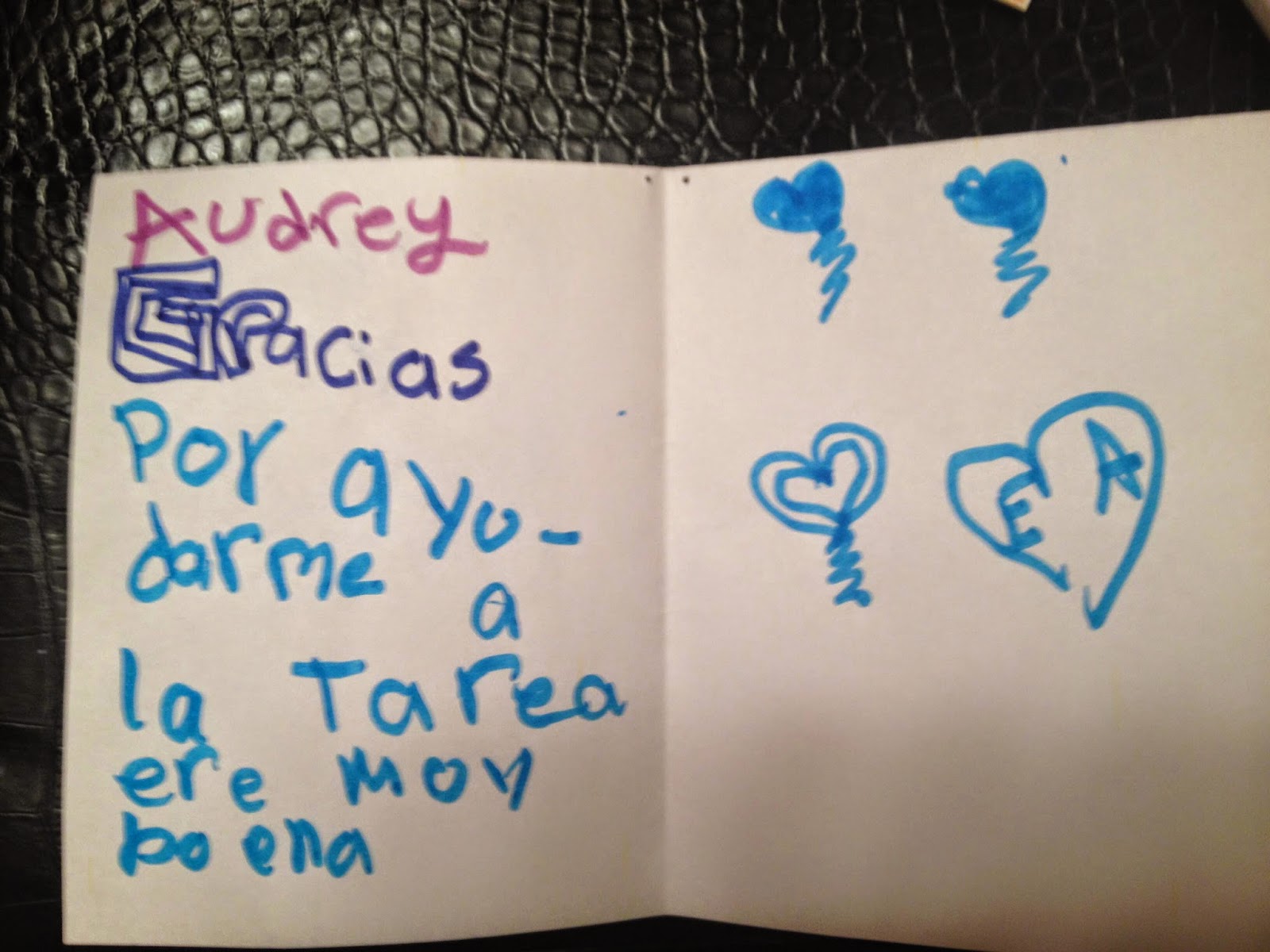
Audrey, a "Spanish in the Community" student, received this card from the young girl she worked with all semester. by Ann Abbott During the last day of each semester, my "Spanish in the Community" students write a thank-you note to the person/people they have worked with in the community. They have to show their appreciation and mention something specific they have learned from them and their time in the organization. It seems that the students in SOAR, the after-school tutoring program where several of my students work, also sends thank-you notes at the end of the semester. Rejane Dias, my TA, send me the following message and the pictures in this post: Hi Ann, One of my students received this card from the elementary student she helped out while volunteering for the class. She shared about it with class this Wednesday. I told her to send a picture of it to me and we may put it on the blog. I thought it could be another way to show how this course real...

The Engaged Humanities and Spanish Community Service Learning

Image
When I think of the engaged humanities, these are the tenets that come to my mind and guide my work. by Ann Abbott Recently an old friend asked if I would be willing to go to her campus this year to give a talk. Yes! I love talking about Spanish community service learning (CSL), and I love the chance to see old friends in the places they work. To organize the trip I needed to send her the usual--my CV, a photo, title of the talk, a blurb. But I also needed to write a paragraph describing my background and expertise in the humanities. Hmmmmm. Even though my PhD is in Hispanic literature, I have felt very distanced from the humanities for many years. When you do work in the scholarship of engagement, you can take a real beating from traditional humanists. "You make us look like a service department." "This isn't a vocational college." "Literature is the heart of Spanish programs." "There's no theory in what you do." But in this pr...

Student Reflection

Image
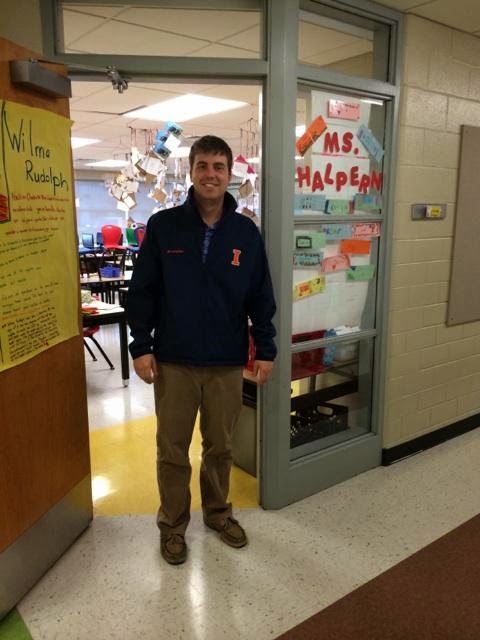
Soy yo en esta foto, delante del  salĂ³n del  segundo grado! Siempre estĂ¡ lleno de actividad. by Matt Campion Para mi proyecto comunitario, estoy trabajando como tutor en la escuela primaria Garden Hills. Esta poblaciĂ³n de estudiantes de esta escuela es muy diversa, con un muchos estudiantes de habla hispana. Enb los grados mĂ¡s pequeños se les enseña en una combinaciĂ³n de español e inglĂ©s. El español es el idioma principal en estas clases. A travĂ©s del programa SOAR, estoy trabajando en un  salĂ³n  de  segundo grado con estudiantes de habla hispana. Nuestras sesiones tienen lugar despuĂ©s de la escuela para una hora y media. Dividimos el tiempo entre lectura y matemĂ¡ticas. Para la lectura, dos estudiantes se turnan leyendo el mismo libro. Luego los tutores hacen preguntas sobre lo que pasĂ³ en el libro y lo que piensan que va a pasar. Los estudiantes obtienen un libro a la semanay hay un sistema de puntos para lograr pĂ¡ginas y discusiĂ³n sobre el libro. Los n...

Student Reflection

Image
by Kelsey Marquez One Day  Sadness. Sadness is what I felt when I saw their innocent faces go from excited to disappointed. I will never forget the second time I went to volunteer at Garden Hills. When I walked into the nearly empty classroom, I came across an unfamiliar face. The stranger quickly introduced herself and said that she was the substitute teacher for the day and that the kids were still at Library. Within about five minutes, we went to pick up the children from Library and took them to get their vision tested. Up until that point, everything was pretty normal and going as usual. But soon that would change. The substitute teacher was an elderly Caucasian woman who didn’t speak a word of Spanish. For most classes, this would not be a problem, but this class is a bilingual kindergarten class. What does that mean? It means that the children are being taught in Spanish and know very little or no English at all. As we waited for the children to get tested, th...

Spanish Community Service Learning Students Interpreting at Parent-Teacher Conferences

Image
What would you do if you couldn't talk to you children's teacher? by Ann Abbott Parent-Teacher conferences are a crucial opportunity for families to communicate with the teachers and make concrete plans for their children's academic success. As a parent myself, I sometimes think of parent-teacher conferences as a way for us to influence how the teachers see and interact with our children: they know that behind each of children are two parents who are interested in their children's success, engaged in supporting their success at home, respectful of the teachers' work, and committed to advocating for our children. Imagine if you couldn't talk to your kids' teachers because you didn't speak the same language. What information about your child would you miss out on? What consequences might that have for your child? How might you be judged as a parent? Each semester, several of my students help at Central High School's parent-teacher co...

How To Translate a Community Partner's Document in the Classroom

Image
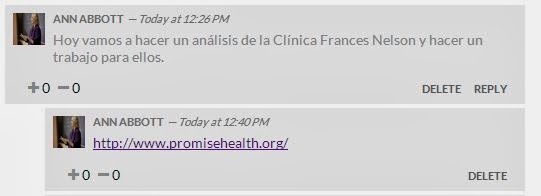
by Ann Abbott Translating gives me a headache. It's too hard. I never feel sure of myself. And even though I know that according to the rules you're supposed to translate from your second language (Spanish or Italian, for me) into your first language (English, for me), I also know that what our community needs desperately are translations from English to Spanish. My colleague Prof.  Anna MarĂ­a Escobar  received a request from a community organization for a translation. She asked if my students might be able to do it. Normally I would have said no, but instead I planned the lesson below. Note: One of my students (Cassie Grimm) is involved with a student start-up called  StudyCloud . I love to support student entrepreneurs, so this semester I am using StudyCloud as my course management system. As you'll see from the screen shots below, it works like Facebook in many ways and provides a much more visually-engaging learning experience than Blackboard. #1.  Firs...